Follow us
划动查看中文版
As engraving machines run at a steady pace, relief carvings adapted from ancient book Sancai Tuhui (Collected Illustrations of the Heaven Earth Human) line up in sequence.
Inside the intangible‑cultural‑heritage workshop of a dozen square meters, 70‑year‑old craftsman Wang Zhenhua is skillfully fine‑tuning numerical‑control equipment to cut and polish wood.
Sancai Tuhui, compiled by Wang Qi of the Ming Dynasty, is a comprehensive illustrated encyclopedia. To bring landscapes and scenes depicted in the book out of the confines of printed pages and into ordinary households, Wang Zhenhua's team spent several months reproducing the ancient illustrations in three‑dimensional forms with mortise‑and‑tenon joints.
This series draws design inspiration from the ceilings of ancient Chinese architecture, as recorded in Liang Sicheng's Rules of Qing‑Style Architecture. The entire base is assembled purely with mortise‑and‑tenon joints, without glue or nails. It can be fully disassembled and reassembled, with ancient‑painting relief carvings embedded on top.
"The ceilings of ancient Chinese buildings are made of square panels piece by piece. My original idea was to incorporate numerous elements of ancient architecture onto these panels. We display bracket sets, doors, windows and eaves of ancient buildings. Once inspiration struck, the basic design was finished within five days."
The main material adopted is East African blackwood. Restricted by its growth properties, merely 3 percent of raw timber can be turned into finished works. Based on wood mechanics, they reconstruct the entire timber cutting‑and‑sourcing system. Natural wood deformation is precisely predicted, and flexible joint designs keep wood expansion and contraction within controllable ranges. After integrated carving of an entire relief, it is cut into segments along pre‑set paths, enabling multi‑directional movement via underlying mortise‑and‑tenon tracks.
"Six tons of raw wood can only yield around one thousand pieces. The mortise‑and‑tenon joints serve as flexible connections. Yet the overall structure must stay secured. Dislocation, position‑limiting and avoidance — this is my summary of traditional Chinese mortise‑and‑tenon concepts, which are now widely applied. For mechanical balance, timber shall be cut perpendicular to growth rings. No paint or wax is applied to our mortise‑and‑tenon works. We just let them dry naturally. We dynamically present the illustrations from the splendid encyclopedia compiled by Wang Qi through relief carvings."
Previously, miniature woodworks relied entirely on hand carving. A single fine miniature relief would take craftsmen a whole week to finish. But this year, the workshop introduced intelligent numerical‑control engraving equipment, which built a complete workflow covering digital modeling of ancient‑book line‑drawings, rough machine carving and manual fine polishing. The traditional craft has achieved digital upgrading, with a qualitative leap in efficiency.
In his 70s, Wang Zhenhua started from scratch to learn modeling and programming, transforming himself from a traditional craftsman into an interdisciplinary artisan. Up to now, Wang Zhenhua has created more than 100 unique relief patterns. This intangible cultural heritage project has built a complete inheritance team covering three generations of his family as well as master‑apprentice successors.
"We went through two tough months (learning new technologies). Burrs kept appearing, and surfaces failed to stay smooth. Later we discussed with experts and manufacturers. We tried the 45‑degree cutting angle, and the outcome turned out remarkably satisfying. For a man nearing 70 like me, this marks tremendous progress. Guided by my student, a software engineer, I mastered Match3 modeling tool and AI system of relief‑generating. I started all over from being a total computer novice. My granddaughter is even more capable than me. At 14, she comes here to teach me, while learning alongside the team."
Today the cultural‑and‑creative series integrating ancient books, mortise‑and‑tenon craft and digital technology is stepping out of the workshop for diverse applications in cultural‑tourism markets. No longer confined to museum exhibits, traditional mortise‑and‑tenon craft enters public life through lightweight interactive forms, realizing the living inheritance of intangible cultural heritage.
雕刻机匀速运转,《三才图会》古籍图画浮雕依次排列。十几平米的非遗工坊里,七旬匠人王震华,正熟练调试数控设备,切割打磨木材。
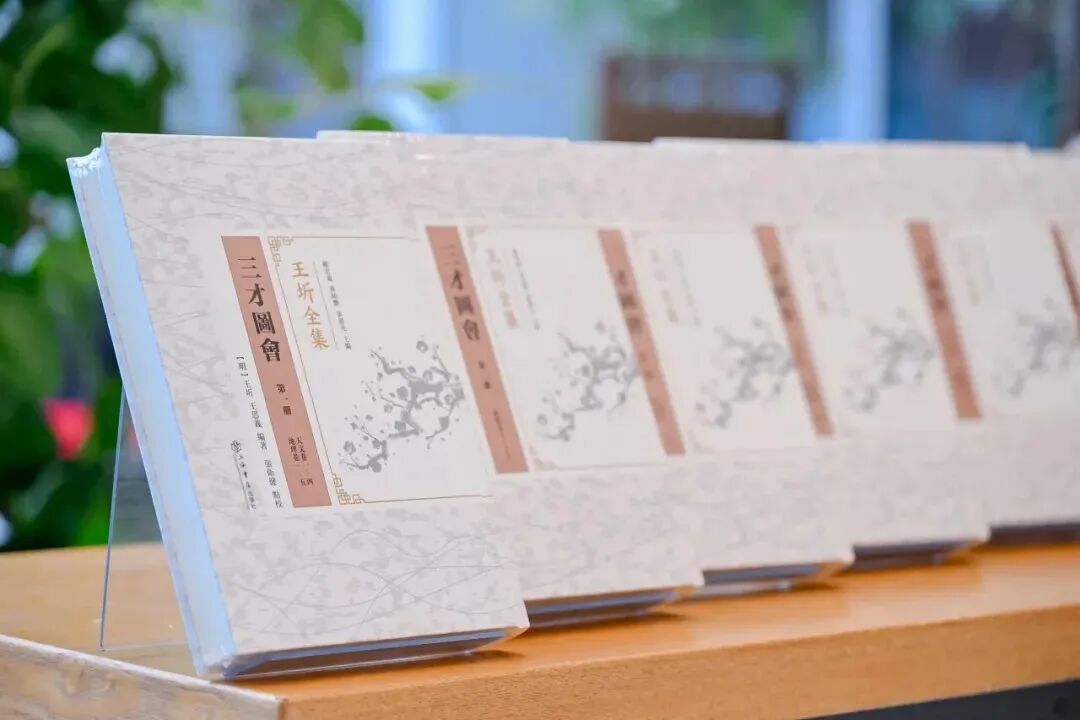
《三才图会》由明代王圻所著,是一部包罗万象的图文百科。为让笔墨间的山河风物摆脱书页桎梏,走入寻常人家,王震华团队耗时数月,以榫卯结构立体还原书中古画。
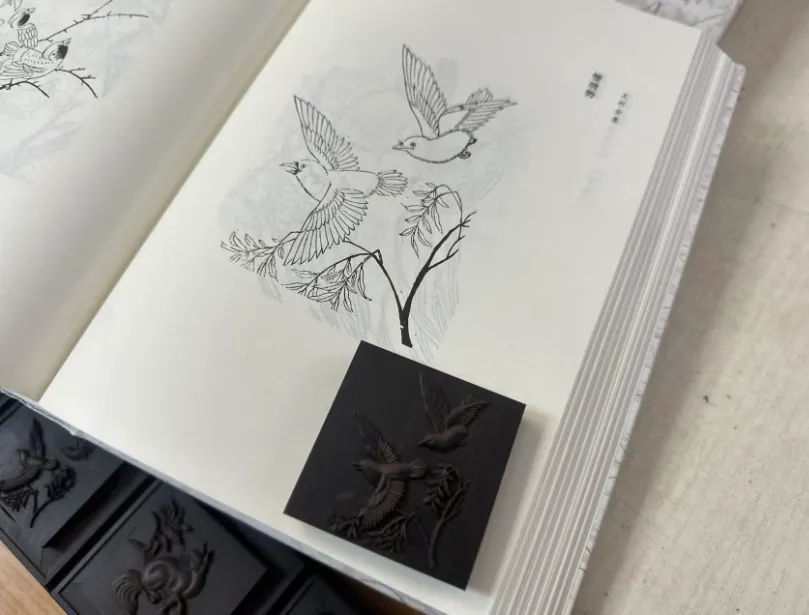
该系列作品设计灵感源自梁思成《清式营造则例》中记载的古代建筑天花板。整套底座全部由榫卯拼接而成,无胶无钉,可完整拆装,古画浮雕则嵌于其上。
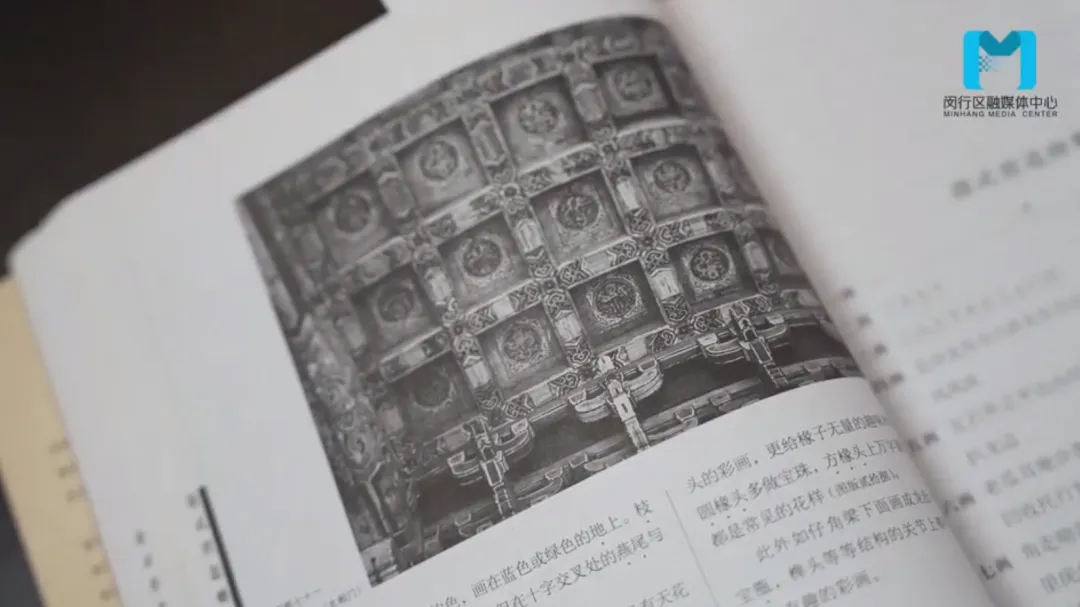
梁思成《清式营造则例》
“古建筑的天花板,都是方形的一块一块的。我想在这个上面,做很多古建元素上去。把古建的斗拱、门窗、翼角铺开,灵感一来,五天就出来了。”
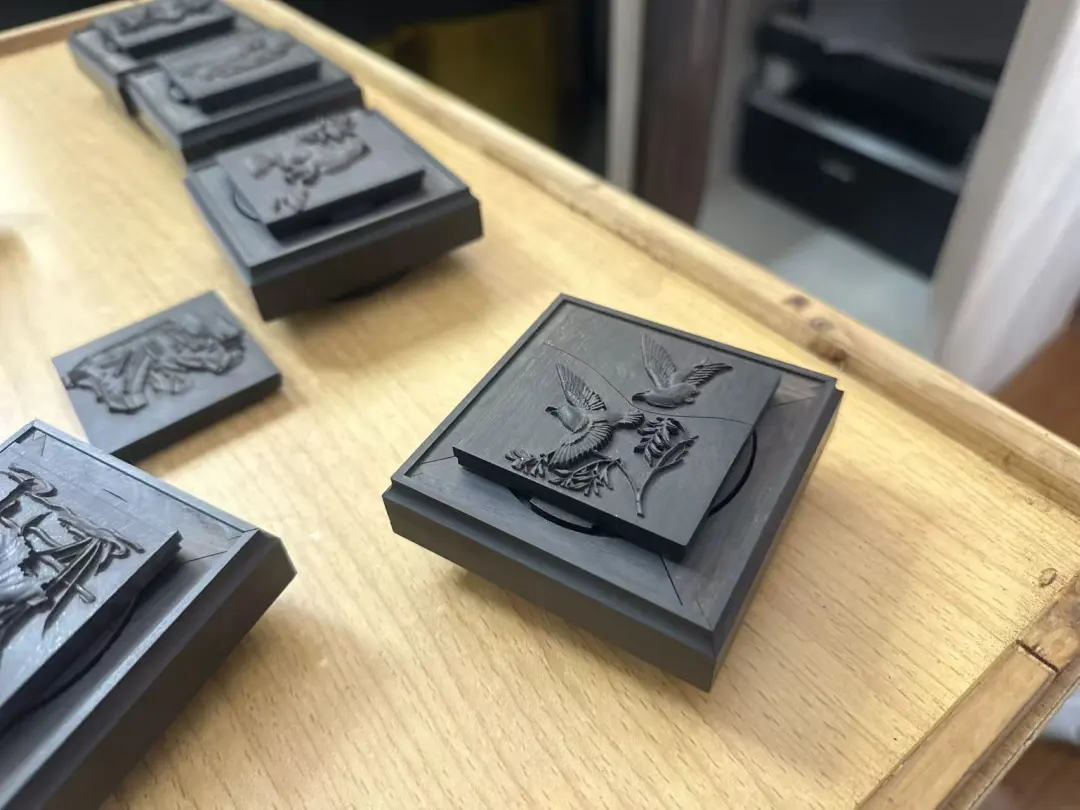
作品选用的主材是东非黑黄檀。受木材生长特性限制,成品出材率仅3%。团队依托木材力学,重构整套开料取料体系,精准预判木料天然形变,以柔性节点设计,将木作胀缩牢牢收束在可控区间。整块浮雕一体雕刻后,沿预设轨迹切割分块,依托底层榫卯轨道,实现多方向活动。
“王圻的“百科全书”这么精彩的东西,要让它动态地出来。所以榫卯是节点,是柔性连接的,但是结构要锁定。错位、限位、避让,这是我总结的中国榫卯的设计理念,在广泛运用在我们的作品里。”
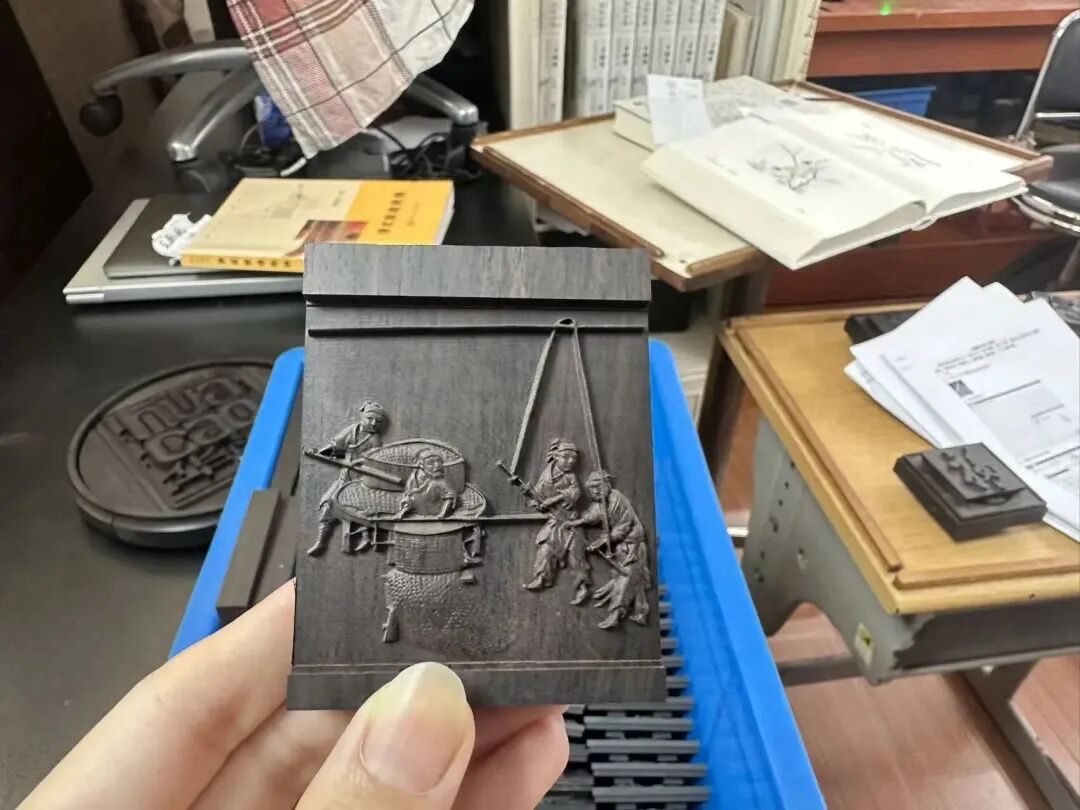
过去微缩木作全部依靠手工雕琢,一件精细浮雕微雕,匠人耗时一周才能完成。今年工坊引入智能数控雕刻设备,打通古籍数字化建模、机器粗雕、手工精修全流程,传统技艺正式完成数字化升级,效率实现质的飞跃。
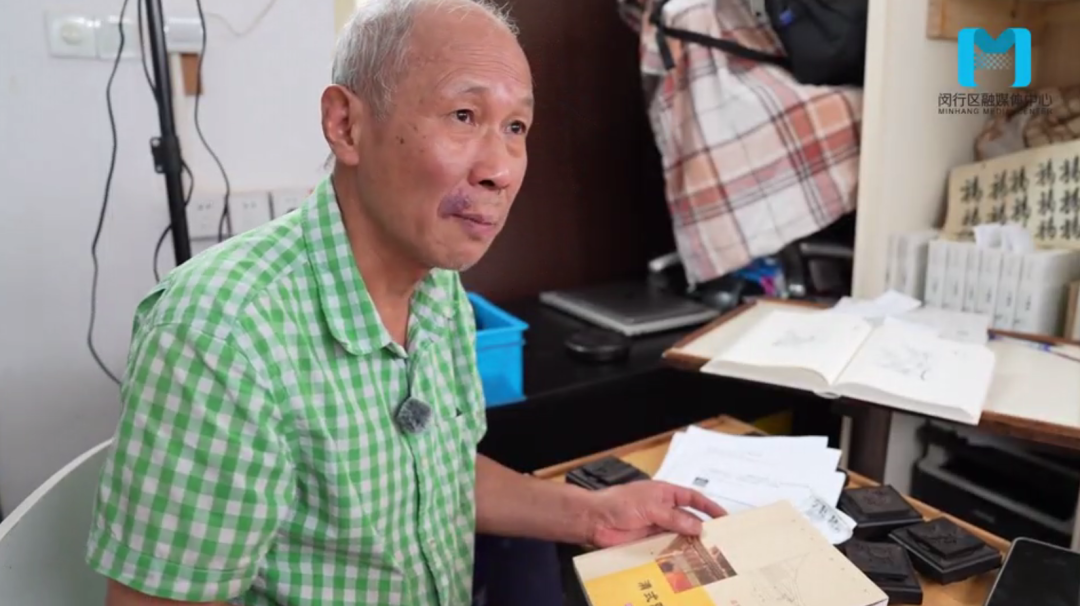
年过七旬的王震华,从零学习建模软件、设备编程,实现传统匠人向复合型工匠的转型。目前,王震华已完成一百余款独一无二的浮雕纹样。这项非遗项目,也形成祖孙三代、师徒传承的完整梯队。
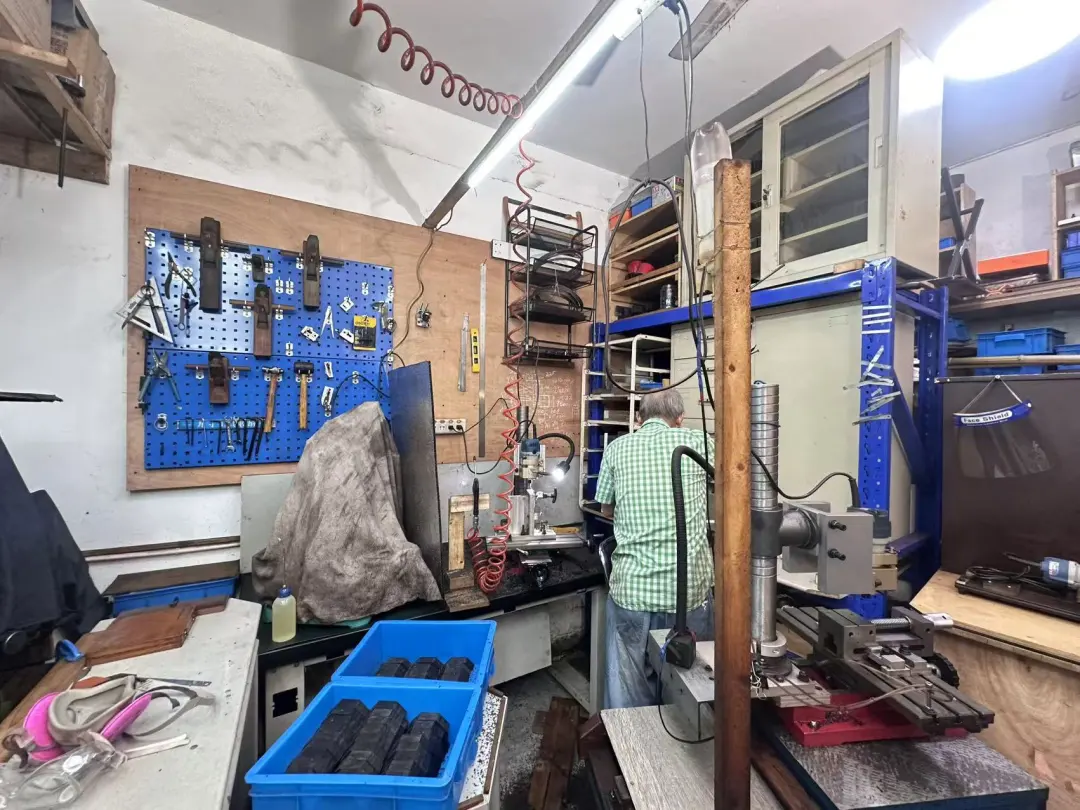
“学新技术一路走来很艰难,起初成品一直有毛刺,不光滑。后来与厂家讨论,我们试了一下45°切入,成品就非常棒。学到的新技术对我一个快70岁的人来说,是很大一个长进。我的学生是软件工程师,在他的指导下,我从一个电脑盲,慢慢学会了Match3(建模工具)、匠人天工(AI浮雕系统)。”
如今,这套融合古籍、榫卯、数字科技的文创,正逐步走出工坊,面向文旅市场拓展多元应用。传统榫卯不再局限于博物馆展品,以轻量化、可互动的形式走进大众生活,实现非遗活态传承。
Swipe for Chinese version

Reported by Guo Xinruo, Lu Qianchen
Edited by Yue Shunshun
Reviewed by Liu Kenbo He Tingting